Candid vs Traditional Wedding Photography: Key Differences
What candid and traditional wedding photography really mean at an Indian wedding, where each style does its best work, and how to brief a team so you get the moments and the family record.
"Do you want candid or traditional?" is usually one of the first questions a wedding photographer in India asks. Many couples answer "candid" because it sounds modern, then discover on the day that their grandparents also expected a proper photograph with every relative on the stage.
The two words describe different ways of working, not just different looks. Understanding the difference helps you decide what to book, how many people you need and what to tell them.
What traditional photography means at an Indian wedding
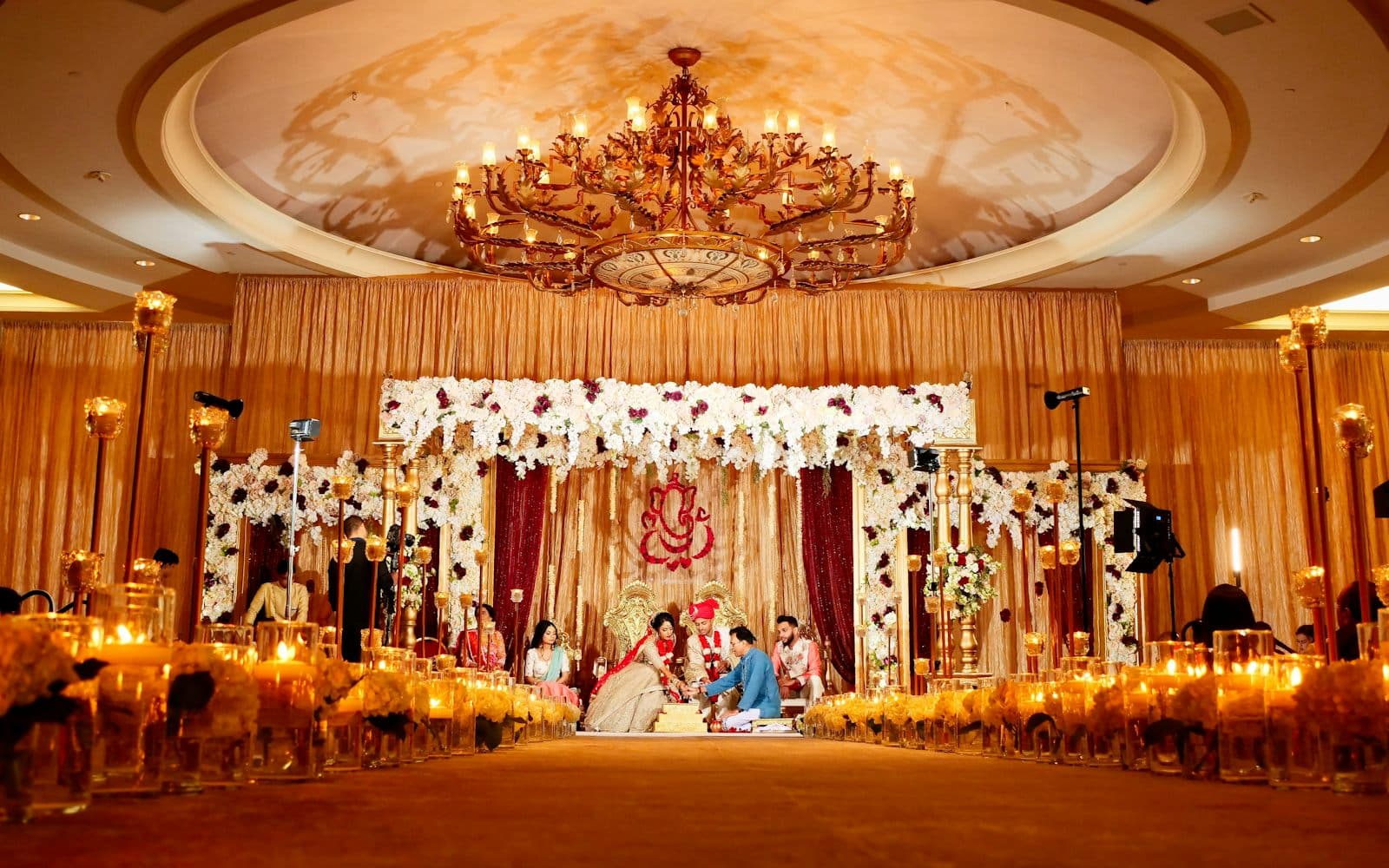
Traditional coverage is the record. The photographer works openly and directs people: families are arranged in groups, the couple is posed on the stage with each set of guests at the reception, and rituals are photographed from a clear, front-facing position so every step is visible. Flash or video lights are common because the priority is that faces are sharp and well lit.
Its strengths are completeness and predictability. If your family wants a photograph of the couple with every uncle, aunt and colleague who came to bless them, traditional coverage is how that happens. It also produces the clear ritual sequence many families expect in a printed album.
What candid photography means
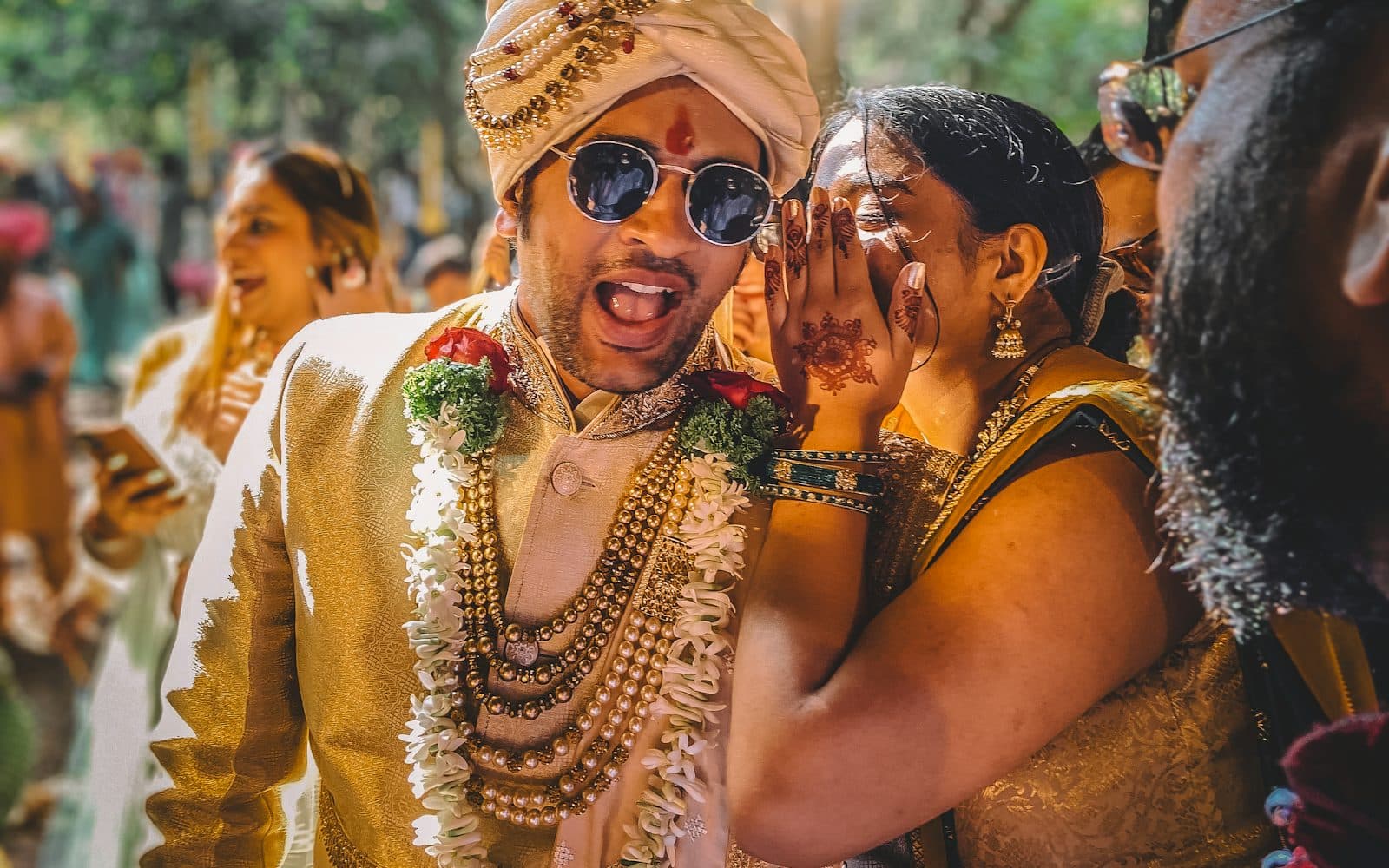
Candid coverage is observation. The photographer tries not to intervene, watching for expressions and interactions as they happen: a mother adjusting a dupatta, friends teasing the groom, a grandfather wiping his eyes during the vidaai. Candid photographers often use longer lenses and available light so people forget they are being photographed.
The approach comes from documentary and reportage photography. Henri Cartier-Bresson, whose work became associated with the phrase "the decisive moment" and who photographed India around the time of independence, is the figure most often linked with this way of seeing. A candid wedding photographer is applying the same idea at a family celebration: wait, anticipate, and press the shutter when the moment peaks.
The differences side by side
| Traditional | Candid | |
|---|---|---|
| Photographer's role | Directs and arranges | Observes and anticipates |
| Typical output | Posed groups, stage photos, ritual record | Expressions, interactions, atmosphere |
| Light | Flash or video lights are common | Available light where possible |
| Who it serves best | Elders, extended family, the album | The couple, close friends, storytelling |
| Risk if used alone | Feels stiff, misses emotion | Misses people and ritual steps |
Neither column is better. They answer different needs, and most Indian weddings have both.
Where traditional coverage earns its place
Family groups. At a large wedding, structured group photographs are the only reliable way to make sure everyone is photographed. Candid coverage will capture the people who are most animated, not necessarily the ones who matter most to your parents.
The reception stage. Guests often queue to greet the couple and expect a photograph. This is fast, repetitive work that suits a traditional photographer.
The ritual record. Ceremonies differ across communities and regions. In a Hindu wedding, for example, practices such as saptapadi and the sacred fire are treated as essential in many parts of north India, while in states such as Tamil Nadu an exchange of garlands or rings and the tying of the thali may be considered enough. Whatever your ceremony includes, a clear photograph of each key step matters to many families.
There is also a practical reason. Nyaaya, a legal information service, notes that proof of solemnisation submitted for registering a Hindu marriage can include photographs or video showing the saptapadi or mangalsutra. Your registrar's requirements depend on your state, but a clean ritual record is useful to have.
Where candid coverage earns its place
Pre-wedding events. Haldi, mehendi and sangeet are loose, emotional and full of movement. These are where candid photographers tend to produce the photographs couples treasure most.
The in-between moments. Getting ready, waiting for the baraat, the minutes before the varmala, the drive away: these are rarely posed and often the most honest images of the day.
Emotion during rituals. The kanyadaan or vidaai photographed from the side, with the faces of parents in frame, tells a different story from the straight-on record.
The light trade-off nobody mentions
Candid photographers often avoid flash so they do not disturb the moment. In a dim mandap at night that means raising the camera's ISO sensitivity, which brightens the image but adds digital noise. Camera makers such as Nikon describe this as a balance between keeping noise low and keeping the shutter fast enough to avoid blur.
Good candid photographers manage this with fast lenses, modern sensors and careful positioning. Less experienced ones produce soft, grainy ceremony photos. This is why you should always ask to see a full night ceremony from any candid photographer, not just daylight highlights.
Why most couples book both
For a typical multi-event Indian wedding, a common solution is a team: a traditional photographer for family groups, the stage and the ritual record, and a candid photographer free to move and observe. A videographer is often added to the same team.
If your budget allows only one photographer, choose someone comfortable doing both: someone who can run a fifteen-minute family group session efficiently and then step back into observation for the rest of the event. Ask to see both kinds of work in a single wedding gallery.
To brief a mixed team well:
- Give the traditional photographer a written list of family groups, in order, and a family member who knows everyone.
- Tell the candid photographer which relationships matter most: a grandparent, a sibling flying in, a best friend.
- Agree who covers which ritual from which position so they are not in each other's frames.
- Decide whether the album will mix both styles or keep them in separate sections.
How to decide for your wedding
Ask yourselves three questions:
- Who is the album for? If it is mainly for your parents and grandparents, lean traditional and add candid. If it is mainly for you, lean candid and keep a short, efficient family session.
- How large is the guest list? The larger the wedding, the more you need structured coverage to make sure nobody important is missed.
- Which events matter most? A small ceremony with a big sangeet calls for strong candid coverage of the sangeet. A large ceremony with many rituals calls for a dependable ritual record.
Once you know the balance you want, our guide on how to choose a wedding photographer in India covers shortlisting and contracts, and the Indian wedding photography shot list helps you brief whoever you book. When the photos arrive, digital and printed albums each suit different kinds of selection.
FliqaIndia.in, the group's consumer photography and film service, lists its wedding packages and inclusions if you want a reference point for how coverage is usually put together.
Sources and further reading
Published by FliqaIndia Private Limited for general information. Photographs are illustrative and are not FliqaIndia projects or clients.
Back to all insights