Essential Wedding Photography Shot List for Indian Weddings
A printable, event-by-event shot list for Indian weddings, from haldi and mehendi to the pheras, family groups and vidaai, with advice on adapting it to your own customs and briefing your photographer.

A shot list is not a script for your photographer. An experienced wedding photographer already knows to photograph the varmala and the bride's entry. What a shot list does is tell them the things they cannot know: which aunt raised you, which ritual your family cares about most, and which friend is flying in from abroad for one evening.
This list is organised event by event so you can print it, tick what matters to you and hand a short version to your photographer. Indian weddings vary enormously between regions, communities and families, so treat the ceremony section as a template and replace the rituals with your own.
How to use this list
Keep two versions. The full list is for your own planning. The version you give your photographer should be short: your must-haves, the people they must not miss, and anything unusual about your ceremony.
- Tick the items that genuinely matter to you. Leave the rest to the photographer's judgement.
- Add names to every people-focused item. "Grandparents" is less useful than "Nani (in the wheelchair) and Dadaji".
- Choose one person from each family who knows everyone and can gather people for group photos. This single step saves more time than anything else on the day.
- Share the event schedule and the list together, at least a week before the first function.
Details and getting ready
These photographs are easy to forget and impossible to recreate later. Put the outfits, jewellery and small objects aside in one place so the photographer can work quickly.
- Bridal outfit, dupatta and footwear laid out
- Jewellery, including heirloom pieces and their story
- Groom's sherwani, safa or turban, and sehra
- Invitation card and any family keepsakes
- Mehendi detail on hands and feet, including hidden names
- Bride getting ready with mother, sisters or friends
- Groom getting ready, turban tying, father or brother helping
- Final look portraits of each of you before leaving
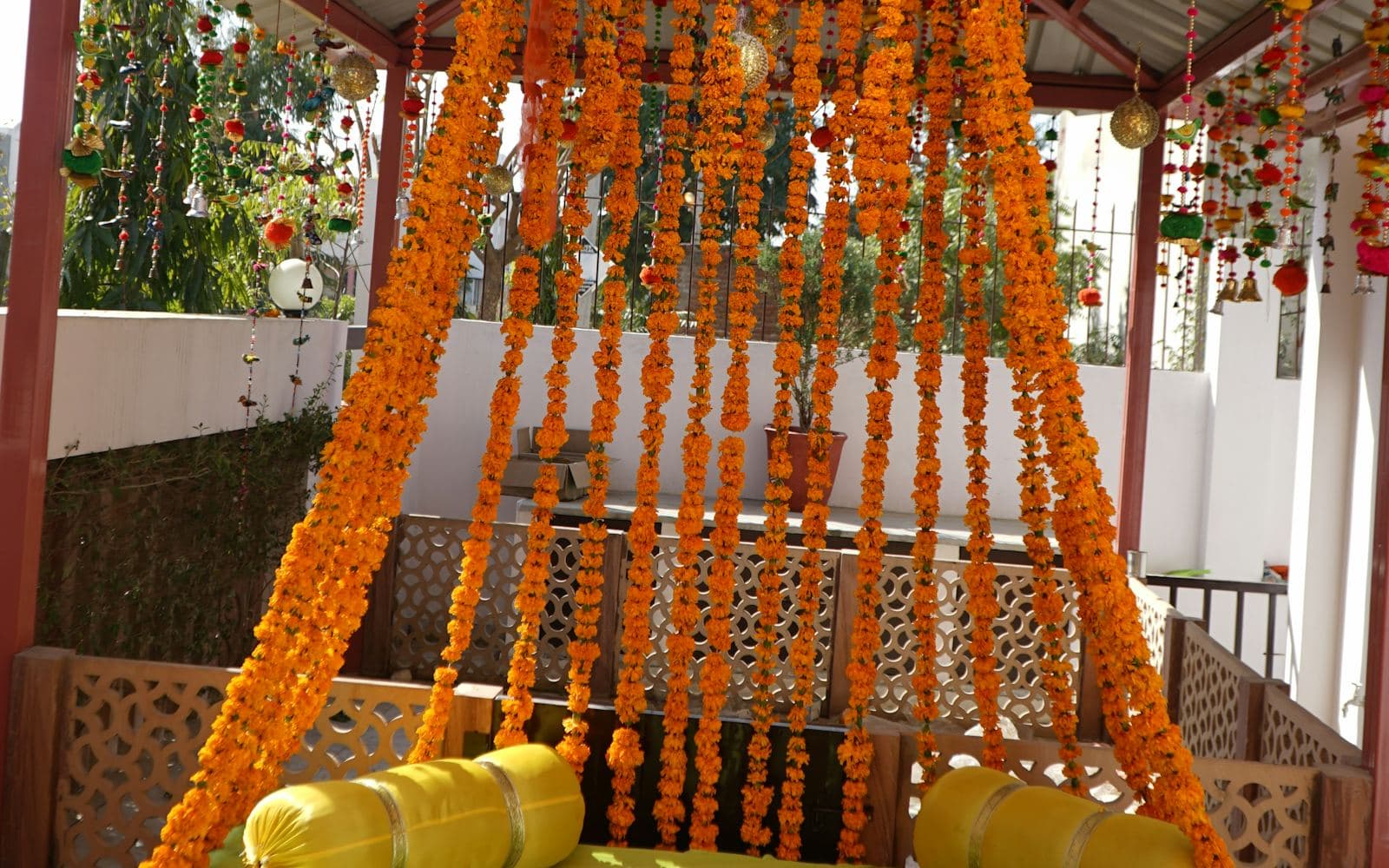
Haldi
Haldi is messy, joyful and fast. Tell the photographer when the turmeric will start, because the best frames happen in the first few minutes.
- The haldi set-up and decor before guests arrive
- Parents and grandparents applying haldi first
- Close-ups of hands, faces and the paste
- Siblings and cousins in the chaos
- A clean portrait before the haldi, and a laughing one after
Mehendi
Mehendi is long and relaxed, which gives the photographer time to wander. Ask for detail as well as atmosphere.
- The mehendi artist at work on the bride's hands
- Finished designs, palms and the backs of the hands
- Friends and relatives getting mehendi applied
- Music, dancing and the dholki if there is one
- Quiet moments: the bride resting while the mehendi dries
Sangeet
The sangeet is usually an evening of performances, often in low light with stage lighting. Share the running order so the photographer is in position for each act.
- Each family's main performance, with a wide frame showing the audience
- Reactions of the couple and parents while watching
- The couple's own dance, if there is one
- Speeches or toasts
- The dance floor once everyone joins in
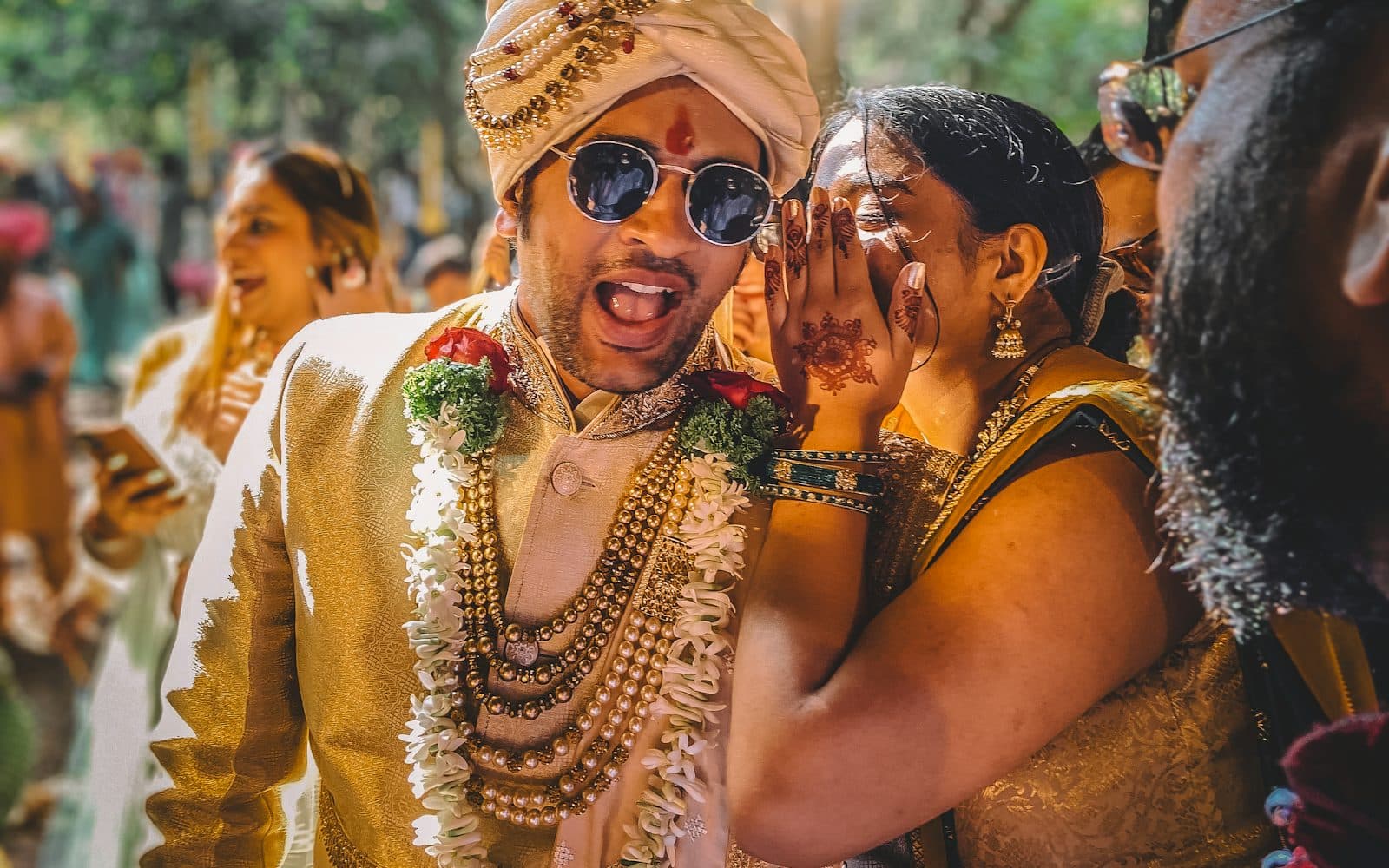
Baraat and arrival
The baraat is chaotic and often the moment the bride does not see. A second photographer or videographer on the groom's side is very useful here.
- Groom on the horse, car or on foot, with the sehra
- Friends and family dancing in the procession
- The welcome at the venue gate, including milni if your families observe it
- Bride's family receiving the groom's family
- The groom's first sight of the mandap
If you want aerial footage of the baraat or venue, confirm that whoever flies the drone checks the official drone airspace map. The Ministry of Civil Aviation divides Indian airspace into green, yellow and red zones, and flights in yellow and red zones need permission, which can affect venues close to airports.
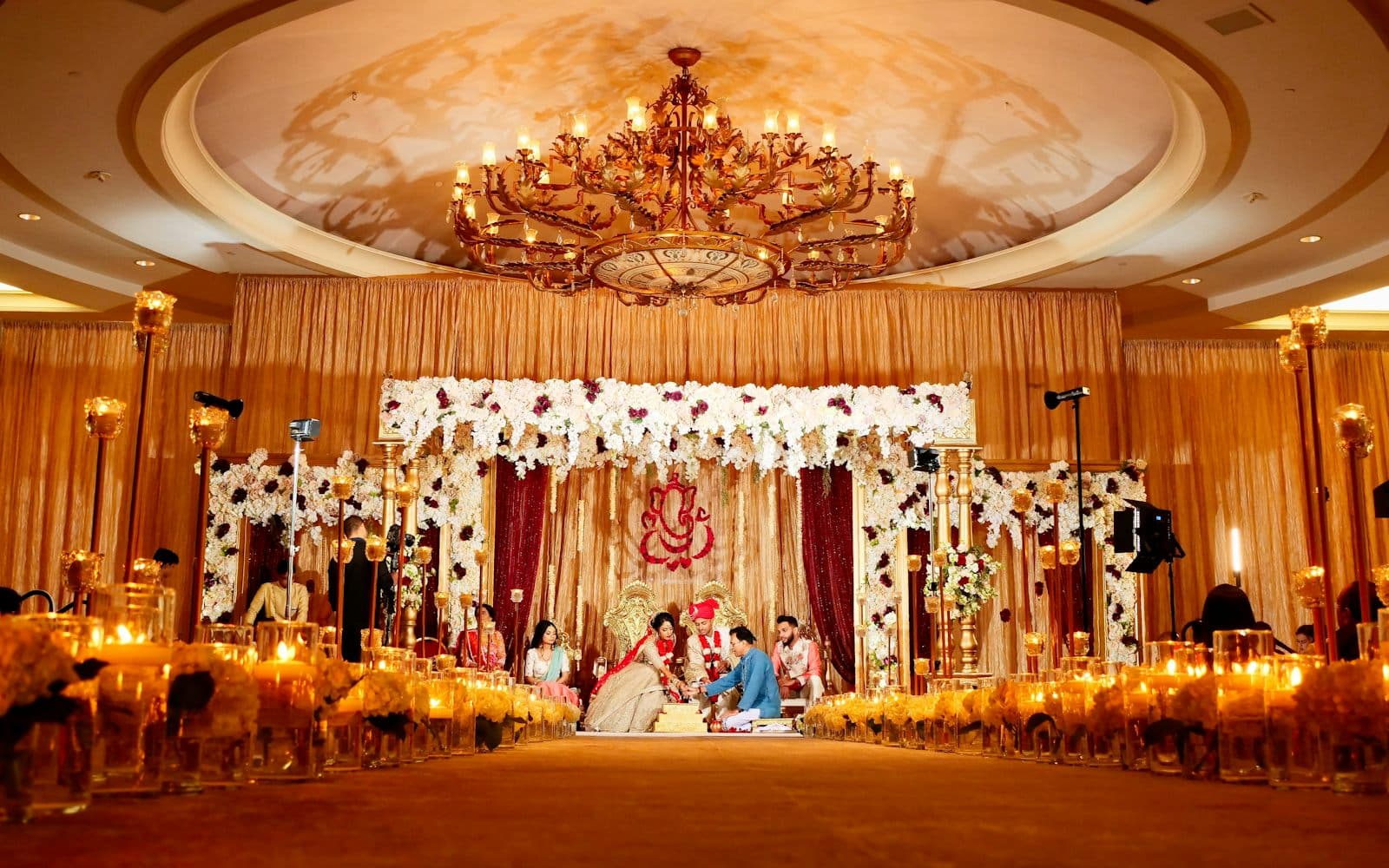
The ceremony
Customs differ widely. In many north Indian Hindu weddings, saptapadi and the sacred fire are treated as essential, while elsewhere, for example in Tamil Nadu, an exchange of garlands or rings and the tying of the thali may be considered sufficient. If your ceremony is an Anand Karaj, a nikah, a church wedding or a civil registration, replace the items below with its key moments and tell the photographer the order.
A sample list for a Hindu ceremony:
- Bride's entry, and who walks or carries her in
- Varmala or jaimala, including the lifting game if it happens
- Kanyadaan, with the parents' faces in frame
- The sacred fire and the priest
- Each of the pheras or the seven steps
- Sindoor and mangalsutra
- Reactions of parents and grandparents during each step
- The first moments as a married couple
Family group photographs
This is the part of the day most likely to overrun. Write the groups in order, largest to smallest, so people can leave once their photo is done. Start with elders who tire easily.
- Couple with both sets of grandparents
- Couple with both families together
- Couple with the bride's immediate family
- Couple with the bride's extended family, in two or three groups
- Couple with the groom's immediate family
- Couple with the groom's extended family, in two or three groups
- Couple with each set of parents separately
- Couple with siblings and cousins
- Couple with friends
Hand this list, with names, to the family helper from each side. They gather people; the photographer arranges and shoots.
Couple portraits
Plan at least two short portrait sessions rather than one long one: one in daylight on a pre-wedding day or before the ceremony, and one after the ceremony while you are still in your wedding outfits. Twenty minutes away from the crowd is usually enough. If the venue has good light in the late afternoon, schedule a session then.
Vidaai and arrival home
The vidaai is often the most emotional part of the wedding and happens quickly. Brief the photographer on when it will happen and where.
- Farewell to parents and grandparents
- Siblings and close friends
- The rice-throwing ritual, if your family follows it
- The car leaving
- Griha pravesh at the groom's home, if it will be covered
Reception
- The decorated venue before guests arrive
- The couple's entry
- Stage photographs with guests (often a traditional photographer's job)
- Speeches, cake cutting or first dance, if any
- Wide frames of the crowd and the food
If you have only one photographer
Many smaller weddings are covered by a single photographer, and that changes how you use the list. One person cannot be with the bride getting ready and at the groom's baraat at the same time, so decide in advance which side of each overlapping moment matters more to you.
- Stagger getting-ready times so the photographer can visit both sides.
- Ask a trusted friend to take phone photos of the moments the photographer will miss, and say so in the brief.
- Keep family groups especially tight: one combined list, in order, with a firm time limit.
- Put the ceremony and the vidaai above everything else. Most other moments can be partly recreated; those cannot.
What to leave off the list
- Generic poses copied from social media. Your photographer will make better frames from your own moments.
- Shots that require stopping a ritual. The priest and the muhurat come first.
- Every single guest. That is what the reception stage queue is for.
Hand it over properly
Send the list, the event schedule, venue addresses, the names and phone numbers of each family helper, and any restrictions (such as places in a temple where photography is not allowed) in one message. Then trust your team to work.
If you are still deciding who to book, start with how to choose a wedding photographer in India and the differences between candid and traditional coverage. After the wedding, our guide to organising and sharing wedding photos helps you get the pictures to everyone who appears in them. FliqaIndia.in lists wedding photography and film packages if you want to see what typical coverage includes.
Sources and further reading
- Paper vs. Pheras: Why a Marriage Certificate May Not Be Enough (opens in a new tab)Nyaaya
- Hindu Marriage (opens in a new tab)Nyaaya
- Ministry of Civil Aviation releases India's airspace map for drone operations (opens in a new tab)Press Information Bureau, Government of India
Published by FliqaIndia Private Limited for general information. Photographs are illustrative and are not FliqaIndia projects or clients.
Back to all insights