Complete Indian Wedding Planning Checklist
A month-by-month Indian wedding planning checklist covering budget, guests, venues, vendors, outfits, multi-day events, marriage registration and the final week, written to adapt to your own customs.
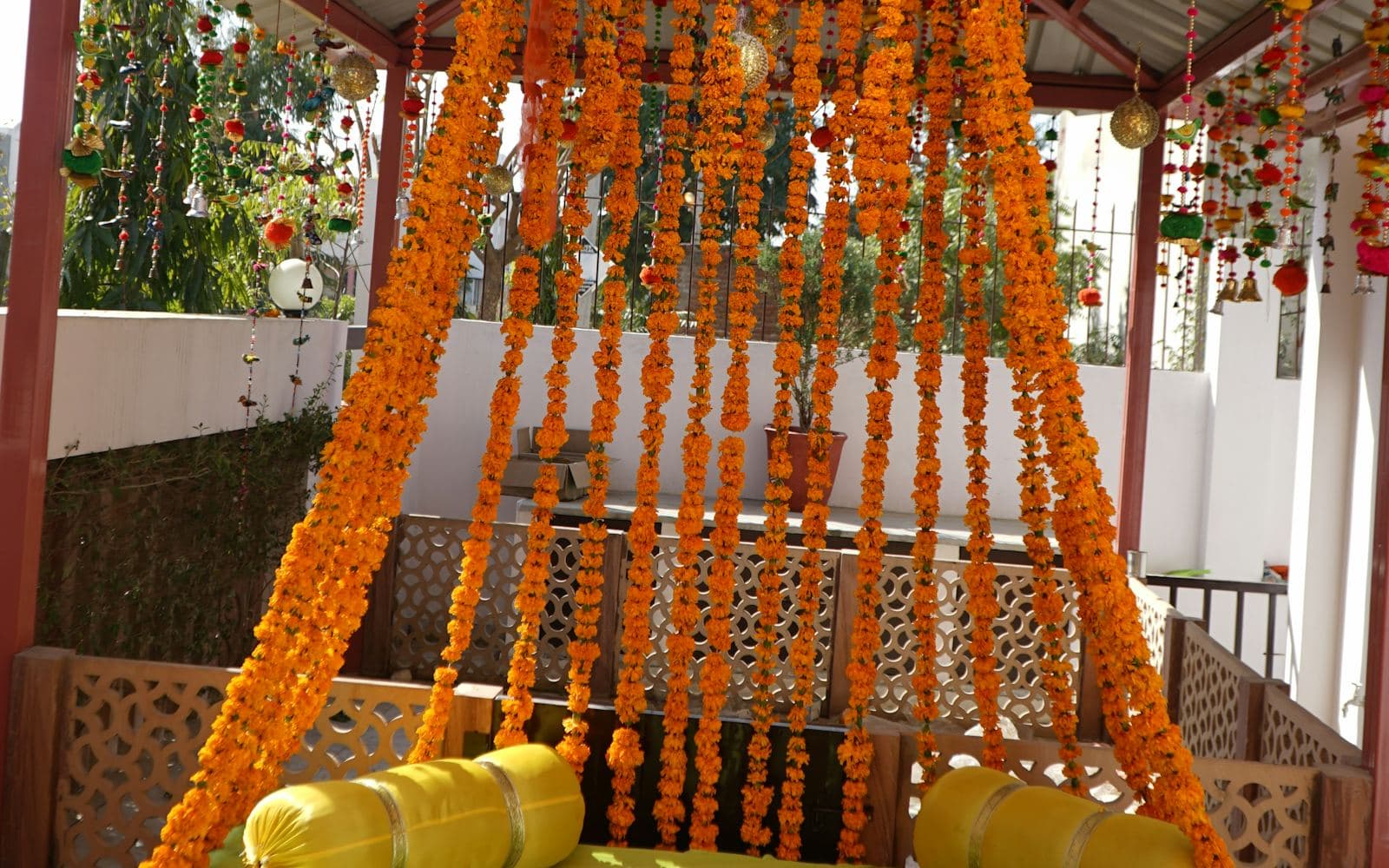
An Indian wedding is rarely one event. It is often a series of functions across several days, sometimes in more than one city, involving two families with their own customs, expectations and budgets. That is why generic wedding checklists, built around a single ceremony and reception, tend to fall apart.
This checklist is organised by time before the wedding, with a final section for after the celebrations. If you have less time, compress it; the order of decisions matters more than the exact months. And because customs differ widely between regions and communities, treat the event-specific items as prompts to adapt rather than rules.
Before you book anything: the five big decisions
Almost every later decision depends on these. Agree them with both families before you approach a single vendor.
- Budget, and who pays for what. Decide the total, how it is split between families, and who has the final say on each part. Writing this down early prevents the most common arguments.
- Approximate guest count. Guests drive the venue, catering, accommodation and transport costs more than anything else. Work out a range per event, not just one number.
- Events. List every function you plan to hold and which family hosts each one.
- Dates. Many families consult an auspicious date or muhurat. Check the season, local holidays, exam periods and the availability of the people you cannot do without.
- Location. Home city, the other family's city or a destination. This decides how much travel and accommodation you are organising for guests.
Building the budget
Rather than starting from a total and dividing it up, list every category first, then estimate each one from real quotes. The categories that usually carry the most weight are the ones that scale with guests.
| Category | What drives the cost |
|---|---|
| Venue and catering | Guest numbers, number of events, menu |
| Accommodation and travel | Outstation guests, destination, season |
| Decor | Number of events, flowers, lighting |
| Outfits and jewellery | Couple, close family, custom work |
| Photography and film | Events covered, team size, album, film |
| Entertainment | DJ, band, dhol, choreography |
| Ceremony and gifts | Priest, ritual items, family exchanges |
| Contingency | Overtime, last-minute changes, extra guests |
Track three numbers for every line: the estimate, the agreed price and what has been paid. When one category goes over, decide immediately which other line absorbs it, instead of discovering the gap in the final week.
9 to 12 months before
The aim at this stage is to secure the things that are in shortest supply: dates, venues and the vendors who book out first.
- Fix the main dates and the order of events
- Shortlist and book the main venue, and any separate venues for other events
- Decide whether you will hire a wedding planner or manage it within the family
- Draft the guest list for each event, by family
- Set a budget for each major category and keep a contingency
- Shortlist photographers and videographers, and book once you have compared full galleries
- Book the caterer, or confirm what the venue's catering includes
- Book the priest or officiant, or confirm who will conduct the ceremony
- Block hotel rooms for outstation guests if the dates fall in a busy season
For photography, our guide on how to choose a wedding photographer in India covers portfolios, packages and contracts in detail.
6 to 9 months before
- Book the decorator and agree a concept for each event
- Book the mehendi artist, makeup and hair artists
- Book music: DJ, band, dhol, or performers for the sangeet
- Start shopping for the main outfits, allowing time for alterations and custom work
- Decide the invitation design and whether you will use printed cards, digital invitations or both
- Plan guest accommodation and transport between venues
- Choose a sangeet choreographer if you plan performances
- If you are travelling for a honeymoon, check passport validity and visa rules early
3 to 6 months before
- Send save-the-dates to outstation and overseas guests
- Finalise the guest list and collect addresses and phone numbers
- Order invitations and gifts for guests or family exchanges
- Confirm menus and arrange a tasting
- Order wedding rings and jewellery, including any alterations to heirloom pieces
- Book transport for the baraat and for guests on the day
- Understand the paperwork for registering your marriage (see the section below)
- Plan the wedding day timeline with the priest, venue and photographer
1 to 3 months before
- Send invitations, and track responses for each event separately
- Final outfit fittings for the couple and close family
- Confirm each vendor in writing: dates, times, venue, deliverables, payment schedule
- Prepare the family group photograph list for the photographer, using our Indian wedding photography shot list
- Arrange the ritual items the priest needs, and confirm who is responsible for each
- Plan a seating or welcome arrangement for elders and guests who need assistance
- Prepare a rain plan for any outdoor event
- Book trial sessions for makeup and hair
The last two weeks
- Confirm final guest numbers with the caterer and venue
- Share one master schedule with all vendors, including contact numbers for each event
- Assign a family coordinator for each event who can answer vendor questions
- Prepare envelopes for payments and gifts, labelled by vendor and event
- Pack an emergency kit: safety pins, medicines, chargers, snacks, a sewing kit
- Collect outfits and jewellery, and decide where each set is kept on each day
- Confirm the photographer has the family group list and each side's helper
The wedding days: who does what
The couple should not be managing vendors during their own ceremony. Hand over responsibility in advance.
| Role | Responsibility |
|---|---|
| Family coordinator, each side | Vendors, timing, problems on the day |
| Guest welcome | Elders, outstation guests, seating |
| Ritual helper | Items for the priest, timing of rituals |
| Photo helper | Gathers people for family photographs |
| Payments holder | Settles vendor balances as agreed |
Registering your marriage
Registration is a legal step that is easy to leave until later, but a marriage certificate is often asked for in official processes such as visa applications and changes of name. Rules depend on the law you marry under and on your state.
Hindu marriages. Under section 8 of the Hindu Marriage Act, 1955, state governments make the rules for registering Hindu marriages, so the process and documents vary by state. Registration records a marriage that has already taken place through the required ceremonies; Nyaaya, a legal information service, reports that the Supreme Court has made clear a certificate without a valid ceremony does not create a marriage. Documents commonly used as proof of solemnisation include the invitation card, a certificate from the priest, and photographs or video showing the saptapadi or mangalsutra. Ask your photographer to make sure those moments are clearly captured.
Special Marriage Act, 1954. Couples marrying under this Act, including many inter-faith couples, give written notice to the Marriage Officer of a district where at least one of them has lived for at least 30 days. The notice is published, and there is a 30-day window for objections before the marriage can be solemnised and registered, with three witnesses. Build this period into your timeline if it applies to you.
After the wedding
- Complete marriage registration if you have not already
- Settle final vendor balances against what was delivered
- Return rented outfits, jewellery and decor items
- Send thank-you messages to guests and vendors
- Update documents if you are changing your name
- Follow up on photo and film delivery dates in your contract
- Back up the delivered photos and films in at least two places
When the photographs arrive, choosing between digital and printed wedding albums and deciding how to organise and share the photos are the last planning decisions. If a vendor dispute cannot be resolved directly, the government's National Consumer Helpline accepts grievances online and by phone.
If you prefer to plan on your phone, Fliqa WedPlan is a free Android app from the group for organising guest lists, expenses, checklists and events, including multi-day Indian ceremonies.
Sources and further reading
- Registration of Hindu Marriage (opens in a new tab)Nyaaya
- Paper vs. Pheras: Why a Marriage Certificate May Not Be Enough (opens in a new tab)Nyaaya
- Registration of inter-religious marriage (Special Marriage Act, 1954) (opens in a new tab)Nyaaya
- National Consumer Helpline (opens in a new tab)Department of Consumer Affairs, Government of India
Published by FliqaIndia Private Limited for general information. Photographs are illustrative and are not FliqaIndia projects or clients.
Back to all insights