
Digital Wedding Albums vs Printed Albums
Printed albums and digital albums do different jobs. This guide compares how they are viewed, shared and preserved, what drives their cost, and how Indian families can choose or combine them.
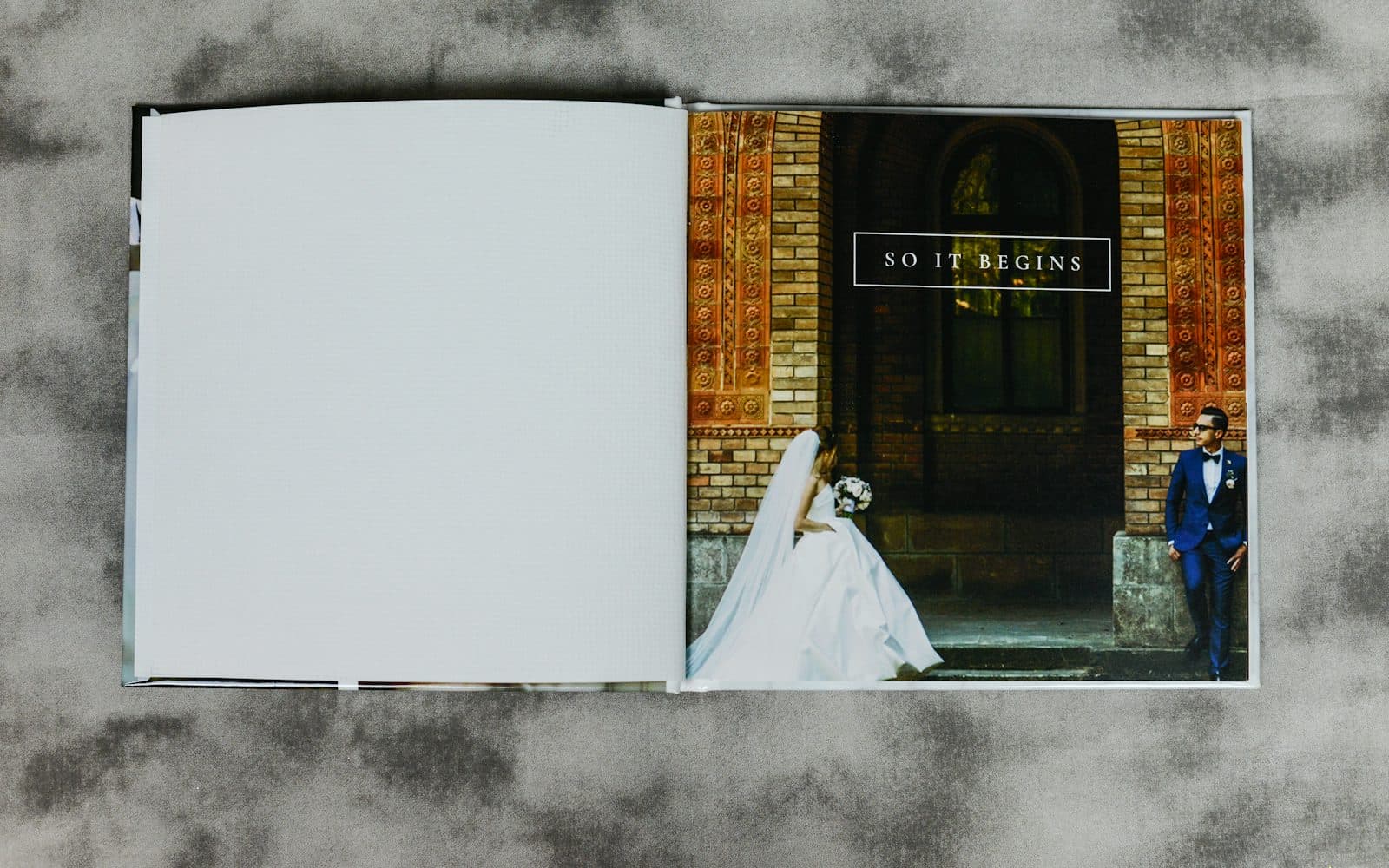
Once the wedding is over, the question of the album arrives. Should you invest in a heavy printed album that sits in the living room, a digital album that lives on everyone's phones, or both? Many photographers in India offer both, and families often have strong and different opinions about which matters more.
There is no single right answer. A printed album and a digital album are different objects that do different jobs. This guide sets out what each one is good at, how each is best preserved, and a practical way to decide.
What we mean by each format
The words are used loosely, so it helps to be precise.
| Format | What it is | How it is viewed |
|---|---|---|
| Printed album | Designed spreads printed and bound into a book | In hand, one copy at a time |
| Digital album | The same kind of designed spreads, delivered as files or in an app | On a phone, tablet or TV |
| Photo gallery | The edited photographs themselves, not laid out as a story | Online or as downloaded files |
A digital album is not the same as a folder of edited photos. Both albums involve the same design work: selecting the strongest images, sequencing them across the functions, and laying them out page by page. The difference is only in how the finished design reaches you.
Where a printed album wins
A printed album has qualities a screen cannot copy.
- It is a shared, physical experience. Grandparents, cousins and neighbours can turn the pages together on a sofa, without anyone handing over a phone.
- It does not depend on technology. No battery, no app, no login, no file format that might become hard to open in twenty years.
- It is chosen and finished. An album forces a selection. A few dozen spreads that tell the story are often looked at more than a gallery of two thousand photos.
- It suits elders. For many older relatives, a printed album is simply easier to enjoy than a small screen.
The trade-offs are real too. There is usually one main copy, so if both families want one, you pay for extra copies. A printed album is heavy to carry abroad. It can be damaged by water, humidity, insects or careless handling, and if it is lost, it is lost.
Where a digital album wins
- Everyone can have it. Relatives in other cities or abroad can see the full album on the day it is delivered.
- Nothing wears out from viewing. Looking at a digital album a hundred times does not crease a page or fade a print.
- Easy to carry. It travels in a pocket and can be shown at the next family function.
- It can be copied for safety. Digital files can be backed up in several places, which a single physical book cannot.
The weaknesses are different. A digital album depends on a device, a file format and sometimes an app or online service continuing to work. Files can be lost through a failed phone, a forgotten password or an expired account. And a digital album competes for attention with everything else on a phone, so it may simply be looked at less.
How long does each last?
Both formats can last for generations, but only if they are cared for. The risks are just different.
Caring for a printed album
The Library of Congress recommends storing photographs in a relatively dry, cool and stable environment: 30 to 50 per cent relative humidity and around 21°C (70°F) or below. It identifies relative humidity as the single most important factor for most photographic prints, and advises against storage in attics, basements, along exterior walls or near heat sources.
That advice matters in much of India, where monsoon humidity and summer heat are hard on paper and prints. In practical terms:
- Keep the album in a closed cupboard in a lived-in room, not a storeroom, garage or loft.
- Keep it away from outside walls that get damp in the monsoon, and away from windows and direct sunlight.
- Store it flat or upright in its box, and handle pages with clean, dry hands.
- If you add loose photos to your own albums, the Library of Congress advises avoiding "magnetic" or sticky self-adhesive pages.
Caring for a digital album
The Library of Congress's advice for personal digital photos is to make at least two copies, store them on separate media in places as far apart as practical, check them at least once a year, and move them to new media every five years or when needed. The US cybersecurity agency CISA describes a similar "3-2-1" approach for important files: three copies, on two different types of media, with one stored offsite.
For a wedding album, that could mean the files on your computer, a copy on an external drive kept at your parents' home, and a copy in a cloud storage account. Ask your photographer for the album as standard files, not only inside an app, so that you can keep your own copies.
What affects the cost
Prices vary widely between photographers, cities and suppliers, so it is more useful to know what drives the cost than to compare headline numbers.
For a printed album, the cost usually depends on:
- The number of spreads (more functions usually means more pages).
- Size and binding, for example lay-flat pages that open without a gutter in the middle.
- Paper and print type, and the cover material.
- Extra copies for parents or in-laws, often in a smaller size.
- Design revisions beyond what is included.
For a digital album, the printing cost disappears, but the design work does not. Ask whether there is any ongoing charge for hosting or an app, and what happens to access if that service ends.
Indian weddings bring their own questions
Indian weddings are rarely a single event. Depending on the family and community, there may be a haldi, mehendi, sangeet, the wedding ceremony itself and a reception, sometimes in different cities. Customs and the order of events differ widely across regions and communities, so the "right" structure for an album differs too.
Some questions families often face:
- One album or several? Some couples prefer one album covering all functions; others want a separate smaller album for the pre-wedding functions.
- Both sides of the family. If both families expect an album, decide early whether that means extra printed copies, or one printed album and a digital album shared with everyone.
- Relatives abroad. A digital album is often the only practical way for family overseas to see the full story soon after the wedding.
- Elders' preferences. If grandparents will mainly look at the printed album, prioritise the photos that matter to them, such as family portraits and rituals, not only couple portraits.
Our Indian wedding photography shot list can help you decide which moments must appear.
Questions to ask your photographer
- Is a printed album included, and how many spreads?
- Is a digital version of the same album included, and in what format?
- Will I receive the full set of edited, high-resolution photographs?
- How many rounds of design changes are included?
- What paper, binding and cover options are available?
- How much does an extra copy cost, and in what sizes?
- If the digital album is in an app or online, how long is access guaranteed?
- Can I download the album files to keep my own copies?
- What is the delivery timeline for each item?
How to decide
| Your situation | A sensible choice |
|---|---|
| Elders will be the main viewers | Printed album first, digital copy for backup |
| Family spread across cities or abroad | Digital album first, one printed album at home |
| Tight budget | Digital album now, print a selection later |
| You want a family heirloom | Printed album, plus your own backups of the files |
| Many functions over several days | One main album, with smaller extra copies or a digital album for each family |
For many couples, the most practical answer is a combination: one carefully designed printed album for the home, and the same design as a digital album that everyone can see. Because the design work is shared, the second format needs little extra design effort, so ask your photographer how it is priced before you assume it is a separate full cost.
If you are planning the photography itself, our guide to choosing a wedding photographer in India covers what to agree on before you book, and organising and sharing your photos covers what to do once they arrive. Within the FliqaIndia group, Fliqa Album is an Android app for viewing a professionally made wedding album on a phone, opened with a private access code; see its brand profile.
Sources and further reading
- Care, Handling, and Storage of Photographs (opens in a new tab)Library of Congress
- Keeping Personal Digital Photographs (opens in a new tab)Library of Congress (Digital Preservation)
- Data Backup Options (opens in a new tab)Cybersecurity and Infrastructure Security Agency (CISA)
Published by FliqaIndia Private Limited for general information. Photographs are illustrative and are not FliqaIndia projects or clients.
Back to all insights