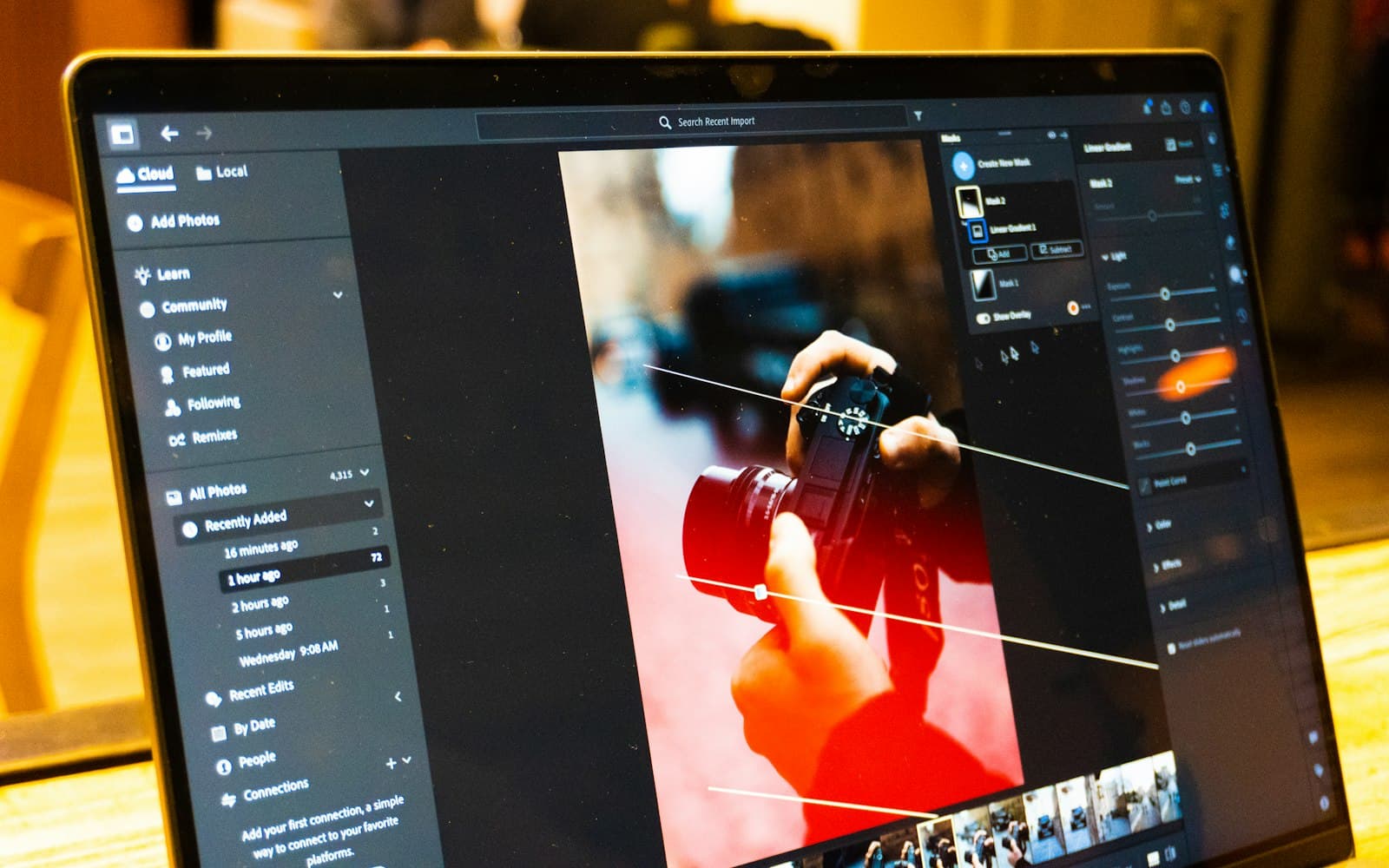
AI Face Search for Event Photos: Benefits, Privacy and Best Practices
Face search lets guests find their own photos in a large event gallery. Here is how it works, where it goes wrong, what India's data protection law requires and how to run it responsibly.
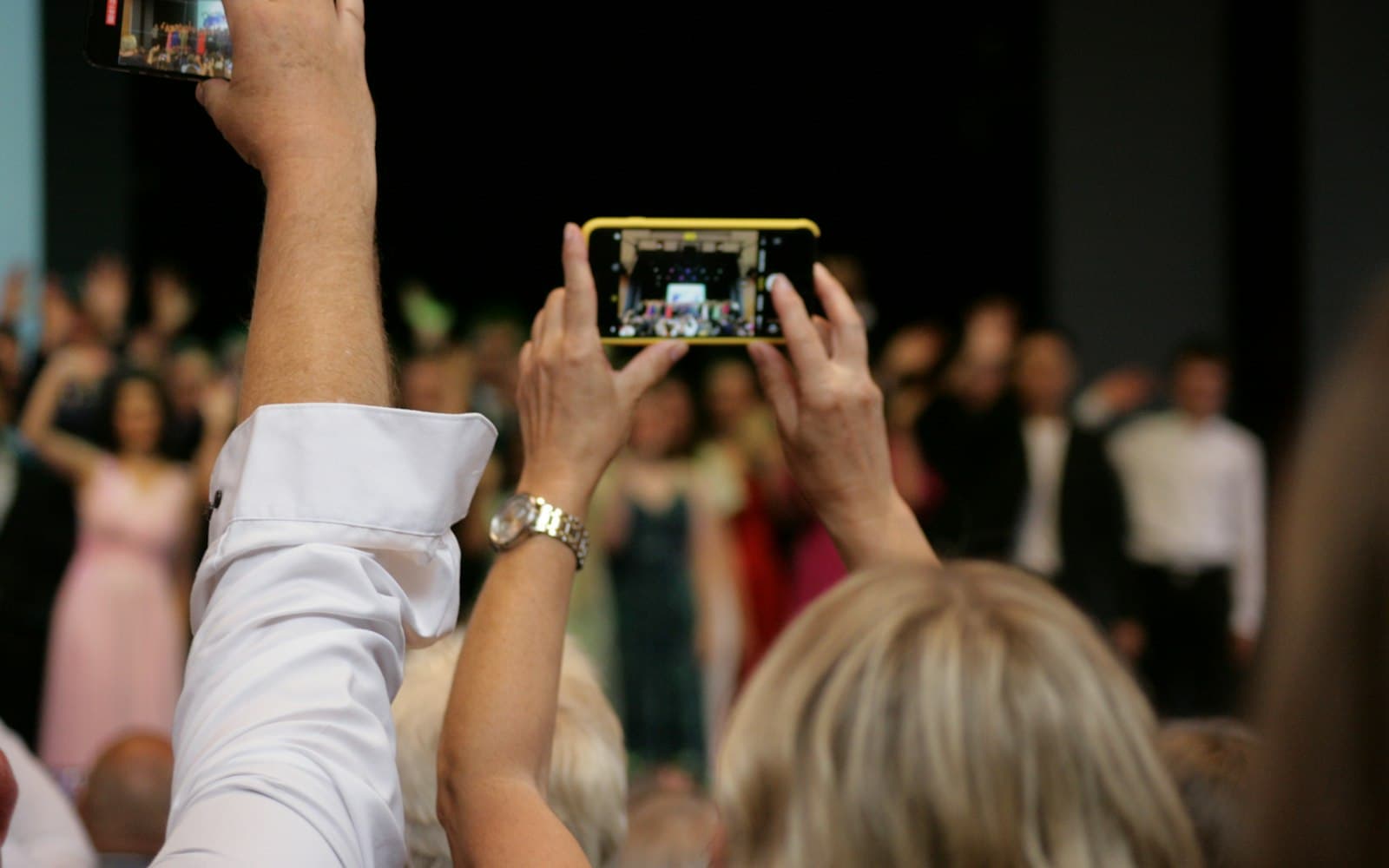
A three-day wedding, a college convocation or a company offsite can easily produce thousands of photographs. Most guests only want the handful they appear in, and scrolling through the whole gallery to find them is slow. AI face search solves that: a guest takes a selfie, and the gallery shows the photos that appear to contain the same face.
It is genuinely useful, and it also involves processing one of the most sensitive things about a person: their face. This guide explains how face search works, what it does well, where it fails, what India's Digital Personal Data Protection Act, 2023 says, and how photographers and organisers can use it without betraying the trust of the people in the pictures.
How face search works
The details differ between products, but the general process is similar.
- The photographer uploads the event gallery. The system finds the faces in each photo and converts each one into a numerical representation (often called a face template or embedding).
- A guest opens the gallery and provides a reference photo, usually a selfie taken there and then.
- The system converts the selfie into the same kind of representation and compares it with the faces in the gallery.
- Photos whose faces are close enough to the selfie are shown to the guest as likely matches.
The key word is likely. Face matching is a statistical comparison, not a certainty. The US National Institute of Standards and Technology (NIST) describes the two kinds of error any such system can make: a false positive, where photos of two different people are treated as the same person, and a false negative, where the system fails to match two photos of the same person.
For a guest, a false negative is an annoyance: a few photos are missed. A false positive is more serious, because it can show one person's photos to someone else.
The benefits
Used well, face search helps everyone involved.
- Guests find their photos quickly, without needing to know which function or photographer captured them.
- Couples and hosts stop acting as a help desk for relatives asking for "the photos with me in them".
- Photographers can deliver one gallery for a large event instead of preparing separate selections by hand.
- Privacy can improve. If guests see only their own matches rather than an open gallery that anyone can forward, fewer people see images that were never meant for them.
The risks to take seriously
Face data is different from an email address. You can change a password or a phone number; you cannot change your face. That is why face search deserves more care than an ordinary photo gallery.
Wrong matches
No system is perfect. A false positive can put a guest's photos in front of a stranger. Event conditions make this harder: stage lighting, side profiles, heavy make-up, veils and turbans, motion blur and large group photos all reduce accuracy.
Uneven accuracy across people
NIST's 2019 study of 189 face recognition algorithms from 99 developers found demographic differentials in the majority of the algorithms it tested, meaning their ability to match two photos of the same person varied between groups defined by sex, age and race or country of birth. NIST also stressed that different algorithms perform very differently, so results for one system cannot be assumed for another. For organisers, the practical lesson is simple: ask the provider how its system has been tested, and do not treat its matches as infallible.
People who do not want to be found
Not every guest wants to be easy to identify. Someone may be avoiding contact with a person who will also be in the gallery, or may simply not want their face processed. A system that lets anyone upload any photo and search for anyone else can be misused to look for a particular person.
Children
Weddings and school events include many children. Their photos call for extra caution, and India's law treats children's data separately (see below).
Data that outlives its purpose
The face templates created for an event are only needed while guests are looking for photos. If they are kept indefinitely, or reused for something else, a convenience turns into a long-term store of identifying data.
What India's Digital Personal Data Protection Act says
India's main data protection law is the Digital Personal Data Protection Act, 2023 (the DPDP Act), supported by the Digital Personal Data Protection Rules, 2025. Both are published by the Ministry of Electronics and Information Technology (MeitY).
Face data is personal data
The Act defines personal data as any data about an individual who is identifiable by or in relation to that data. A photograph of a guest, and a face template derived from it, both fall within that definition. The Act applies to digital personal data, including data collected on paper and digitised later.
Unlike UK data protection law, where the regulator treats biometric data used to identify people as special category data with extra conditions, the DPDP Act does not create a separate category of sensitive or biometric data. The same rules apply to all digital personal data. That does not make face data less sensitive in practice; it means the general obligations are what you must meet.
The Act does not apply to personal data processed by an individual for a personal or domestic purpose. A family member sorting wedding photos on their own phone is generally in that position. A photographer, studio or event company running a face search service for clients is processing data as part of a business, and is likely to be what the Act calls a Data Fiduciary: the person who decides the purpose and means of processing. A software provider processing on its behalf is a Data Processor, and the Act requires a valid contract between them.
Consent and notice
Where processing is based on consent, the Act requires that consent to be free, specific, informed, unconditional and unambiguous, given by a clear affirmative action, and limited to the data necessary for the stated purpose. A request for consent must be in clear and plain language, with the option to read it in English or any language in the Eighth Schedule to the Constitution.
The Rules set out what the notice must contain at a minimum: an itemised description of the personal data, the specific purpose and the service it enables, and a way for the person to withdraw consent, exercise their rights and complain to the Data Protection Board of India. The notice must be understandable on its own, not buried in other terms.
For face search, that points to a short, standalone notice shown before the selfie: what is collected, why, how long it is kept and how to withdraw.
Withdrawal, erasure and retention
A person can withdraw consent at any time, and withdrawing must be as easy as giving consent. The Data Fiduciary must then erase the personal data, and have its processor erase it too, unless the law requires it to be kept. Data must also be erased once it is reasonable to assume the purpose is no longer being served.
The Rules add a separate requirement to retain personal data, traffic data and processing logs for at least one year from the date of processing for certain purposes listed in a schedule, unless another law requires otherwise. Anyone designing retention for a face search service should read both requirements with a lawyer rather than picking one.
Security and breaches
The Act requires reasonable security safeguards to prevent a personal data breach. The Rules list minimum measures, including encryption or similar protection, control of access to computer resources, logging and monitoring of access, backups, and security terms in contracts with processors.
If a breach happens, the Rules require the Data Fiduciary to inform each affected person without delay, and to inform the Data Protection Board, with a detailed report within 72 hours of becoming aware of the breach unless the Board allows longer.
Children
The Act defines a child as anyone under 18. Before processing a child's personal data, a Data Fiduciary must obtain verifiable consent from a parent or lawful guardian, and it must not carry out tracking or behavioural monitoring of children. For event galleries with many young guests, the safest course is to let parents decide whether a child's face is searchable at all.
Rights of the people in the photos
People whose data is processed have rights to a summary of their data and how it is processed, to correction and erasure, and to grievance redressal. The government's press release on the Rules says organisations must respond to such requests within a maximum of 90 days.
Penalties
The Act's schedule sets maximum penalties by type of breach. The highest, up to ₹250 crore, applies to a failure to take reasonable security safeguards. Failure to notify a breach and breaches of the obligations relating to children can each attract up to ₹200 crore.
When it applies: what we could and could not confirm
The Act was passed in August 2023 but is being brought into force in stages. The commencement notification (G.S.R. 843(E)) and the Rules (G.S.R. 846(E)) were both published in the Gazette of India on 13 November 2025. Based on those official texts:
| Stage | What comes into force |
|---|---|
| 13 November 2025 | Definitions, the Data Protection Board and related provisions |
| One year later | Consent Manager registration and related provisions |
| Eighteen months later | Notice, consent, security, breach, children's data, rights, penalties |
By our reading of the notification, the core obligations described above (consent, notice, security, breach intimation, erasure, children's data and individual rights) take effect eighteen months after 13 November 2025, which falls in May 2027. We could not confirm the exact calendar date the government will treat as the start date. Secondary reports in 2026 said the government had considered shortening the timeline; we did not find an amending notification on MeitY's Rules page when this article was published, but you should check the current position on meity.gov.in before relying on any date.
Best practices for photographers and organisers
These practices go beyond the legal minimum where it helps trust.
- Make face search opt-in. Do not index guests automatically for a selfie search they never asked for. The guest's own action, taking a selfie after reading a short notice, should start the process.
- Tell the hosts first. Agree in writing with the couple or client that face search will be used, and how guests will be told: on the invitation, at the venue, or on the gallery page.
- Offer a clear opt-out. Give guests a simple way to ask that their face be excluded from search, and act on it.
- Use the selfie only for the search. Do not add it to a marketing list, reuse it for another event or keep it longer than needed.
- Set a retention period and stick to it. Decide when face data will be deleted, for example when the gallery closes, and say so in the notice.
- Restrict who sees what. Prefer settings where guests see only their own matches. Protect galleries with private links, passwords or access codes, and limit staff access to the people who need it.
- Be careful with children. Let parents choose, and consider excluding children's faces from search by default.
- Choose providers with care. Use a written contract with any software provider that processes the photos, covering security, deletion and whether your clients' photos may be used to train its models.
- Plan for wrong matches. Tell guests that matches can be wrong, and give them a way to report a photo that is not theirs.
- Prepare for a breach. Know who will inform guests and the Board, and what you will tell them.
Questions to ask a face search provider
- Is face search opt-in for guests, and can a guest withdraw easily?
- Can I show a standalone notice before the selfie is taken, in more than one language?
- Can guests see only their own matches rather than the full gallery?
- How long are selfies and face templates kept, and can I delete them on demand?
- Are our photos or face data used to train or improve your models?
- Where is the data stored, and who on your side can access it?
- How has your matching been tested for accuracy across different groups of people?
- Can children's faces be excluded from search?
- What happens to the data when the gallery or our account closes?
- How and how quickly will you tell us about a security incident?
Bringing it together
If you are a guest, read the notice before you upload a selfie, search only for yourself, and report any photo that is not of you rather than downloading it.
Face search works best when it is treated as a privacy feature, not just a convenience: opt-in, limited to the event, deleted on schedule and backed by a clear notice. Fliqa AI, one of the FliqaIndia group's brands, offers private, branded photo galleries delivered by link or QR code, with AI face search for guests; its profile describes what it provides. For the wider picture, see how to organise and share wedding and event photos and how AI is changing professional photography workflows, or contact us with questions.
Sources and further reading
- The Digital Personal Data Protection Act, 2023 (No. 22 of 2023), Gazette of India (opens in a new tab)Ministry of Electronics and Information Technology
- Digital Personal Data Protection Rules, 2025 (G.S.R. 846(E)) (opens in a new tab)Ministry of Electronics and Information Technology
- Notification appointing dates of commencement of the DPDP Act (G.S.R. 843(E)) (opens in a new tab)Ministry of Electronics and Information Technology
- Government notifies DPDP Rules to empower citizens and protect privacy (opens in a new tab)Press Information Bureau, Government of India
- NIST Study Evaluates Effects of Race, Age, Sex on Face Recognition Software (opens in a new tab)National Institute of Standards and Technology
- Biometric data guidance: Biometric recognition (opens in a new tab)Information Commissioner's Office (UK)
Published by FliqaIndia Private Limited for general information. Photographs are illustrative and are not FliqaIndia projects or clients.
Back to all insights